
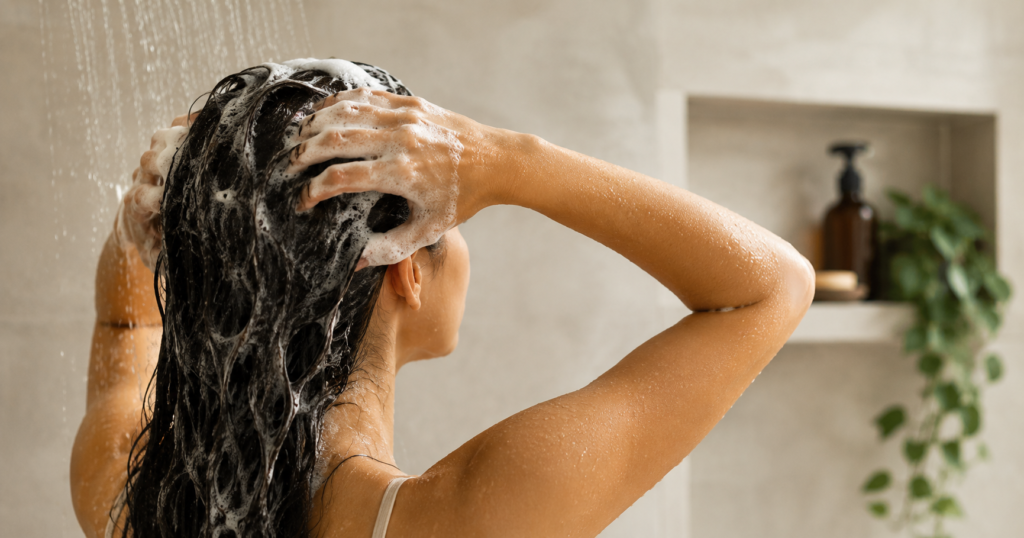
How to wash your hair properly sounds simple. Wet it, apply shampoo, rinse and you’re done.
But the way you wash your hair can affect how clean your scalp feels and how your hair feels afterwards. Using too much shampoo, scrubbing too hard or not rinsing properly can make a simple routine unnecessarily complicated.
The good news is that you don’t need a complicated routine. A few simple steps are usually enough.
If you’re still deciding how often to wash your hair, you can also read our guide on How Often Should You Wash Your Hair?
How to Wash Your Hair Properly: The Simple Answer
Wet your hair thoroughly, apply a small amount of shampoo mainly to your scalp, massage gently with your fingertips, rinse well, and use conditioner on the lengths if needed. You usually don’t need a complicated routine.
Step 1: Wet Your Hair Properly
Start by completely wetting your hair with water.
Don’t rush this step. Make sure the water reaches your scalp and the full length of your hair before applying shampoo.
Properly wet hair also helps the shampoo spread more easily, so you may not need as much product.
Step 2: Apply Shampoo to Your Scalp
Take a small amount of shampoo and apply it mainly to your scalp.
Wondering how to apply shampoo properly? Start with a small amount and spread it between your hands before applying it mainly to your scalp.
Your scalp is where oil, sweat and product buildup tend to collect. You don’t need to deliberately cover every strand of hair with shampoo.
As you massage your scalp, the shampoo and water will naturally run through the lengths of your hair.
The amount of shampoo you need depends on your hair length, thickness and how much buildup is present. Starting with a small amount is better than using too much immediately.
How Much Shampoo Should You Use?
There isn’t one exact amount that works for everyone. It depends on your hair length, thickness and how much oil or buildup is present.
Start with a small amount. If it isn’t enough to clean your scalp, you can add a little more rather than using a large amount from the beginning.
Step 3: Massage Gently
Use your fingertips to massage the shampoo into your scalp.
Gentle circular movements are enough. You don’t need to scratch your scalp or scrub aggressively.
Your fingertips should do the work rather than your fingernails.
Spend a little more time around areas where oil or sweat tends to build up, such as the hairline and the back of the scalp.
Step 4: Rinse Thoroughly
Rinse your hair properly with water until the shampoo is completely washed away.
This is one step that’s easy to rush.
Make sure you rinse the scalp as well as the lengths. Any shampoo left behind can make the hair feel coated or uncomfortable after washing.
Take a little extra time if you have thick or long hair.
Step 5: Do You Need to Shampoo Twice?
Not always.
For a normal wash, one thorough shampoo may be enough. A second wash can sometimes make sense if your hair has a lot of oil, styling product or buildup.
Rather than automatically shampooing twice every time, pay attention to how your scalp and hair feel.
If your hair already feels clean after the first wash, there may be no need to repeat it.
Step 6: Use Conditioner on the Lengths
If you use conditioner, apply it mainly to the lengths and ends of your hair rather than concentrating it on the scalp.
Leave it for the time recommended on the product and rinse thoroughly.
The goal is simple: clean the scalp while keeping the lengths comfortable and manageable.
Common Hair-Washing Mistakes
A few habits can make washing less comfortable than it needs to be.
Using too much shampoo: More shampoo doesn’t necessarily mean cleaner hair.
Scrubbing aggressively: Your scalp doesn’t need hard scrubbing. Gentle massage is usually enough.
Putting shampoo mainly on the lengths: Shampoo is primarily needed where oil and buildup collect — around the scalp.
Not rinsing properly: Take enough time to remove shampoo completely.
Using very hot water: Extremely hot water can feel uncomfortable and may leave the hair feeling dry for some people. Comfortable water temperature is usually a better choice.
Changing your routine too often: Give your routine some time before deciding that you need several new products or steps.
If your hair regularly feels dry after washing, you may also want to read Why Is My Hair Dry After Washing?
A Simple Hair-Washing Routine
You can keep the whole process simple:
Wet → Shampoo the scalp → Massage gently → Rinse → Condition the lengths → Rinse again
That’s it.
Your ideal routine may change depending on your scalp, hair type, activity level and how your hair feels after washing.
There isn’t one routine that works exactly the same way for everyone.
Common Questions About Washing Your Hair
Should shampoo be applied to the scalp or the hair?
Shampoo is mainly needed on the scalp, where oil, sweat and buildup tend to collect. As you massage and rinse, the shampoo will naturally pass through the lengths of your hair.
Do you need to shampoo twice?
Not always. One thorough wash may be enough for a normal wash. A second wash can make sense when there is a lot of oil, styling product or buildup.
Is it okay to wash your hair every day?
It depends on your scalp, hair type, activity level and how your hair feels after washing. Some people may need more frequent washing, while others may prefer less frequent washing.
For more detail, see our guide on How Often Should You Wash Your Hair?
Should you use conditioner after shampoo?
If you use conditioner, apply it mainly to the lengths and ends rather than concentrating it on the scalp. Follow the instructions on your conditioner and rinse thoroughly.
The Bottom Line
Washing your hair properly doesn’t require a long routine or a lot of products.
Focus on cleaning the scalp gently, rinsing thoroughly and treating the lengths according to what your hair needs. Then adjust the routine based on how your hair and scalp actually feel.
The best routine is usually the one you can follow consistently without making hair care unnecessarily complicated.